
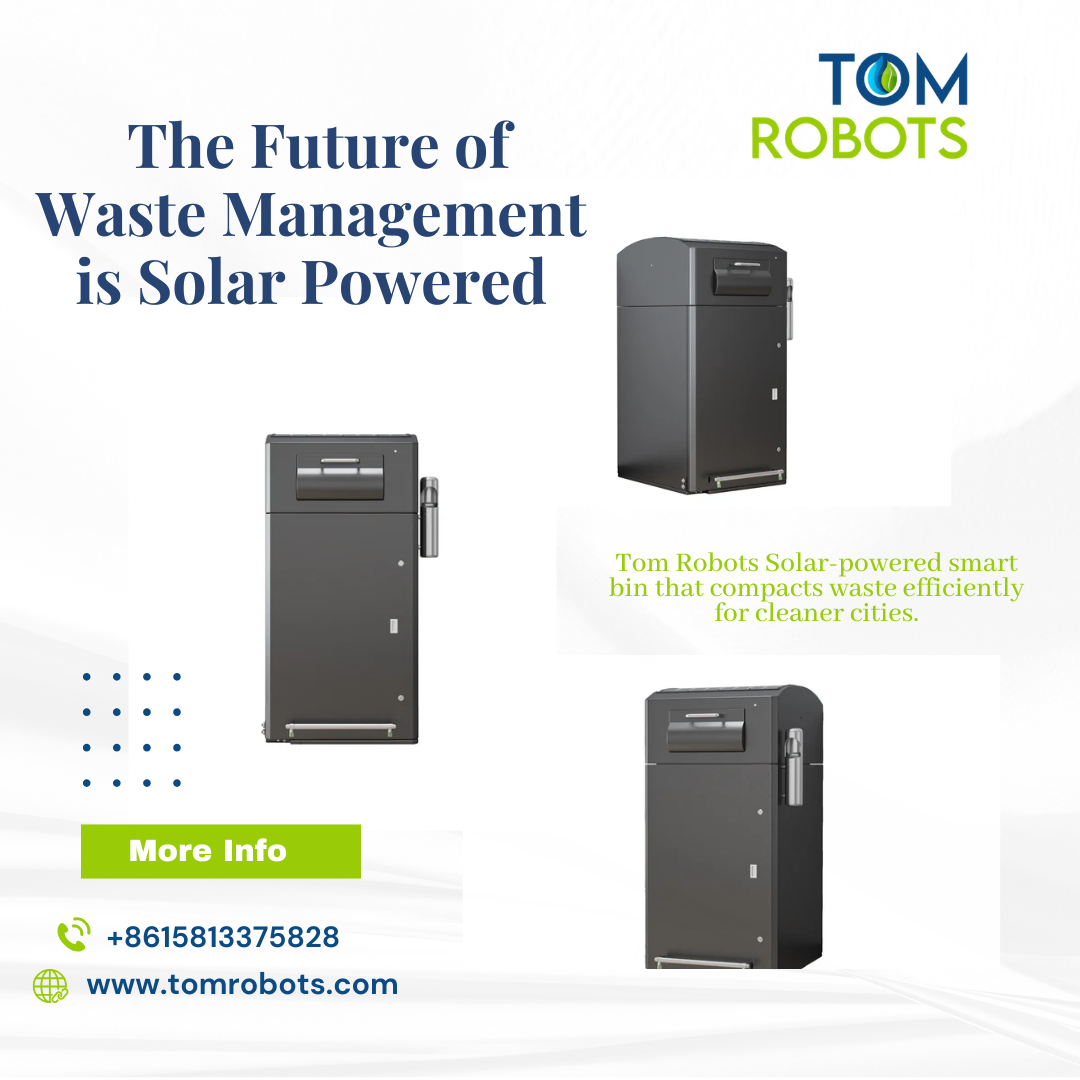
Public bins overflow faster than most facility managers expect, especially in parks, campuses, and busy streets where foot traffic never really stops. This problem lands on someone's desk every single week, usually right after a complaint about a mess nobody wants to clean up. Have you ever walked past a trash bin so full that half of it was spilling onto the ground?
That is the exact problem pushing more facilities toward a Solar-Powered Garbage Compactor. Not as a trend, but as a practical response to a problem that keeps repeating itself across sites of every size, from small courtyards to sprawling campuses with dozens of bins spread across different corners.
Bins Overflow Less Often
An overflowing bin does more than look bad. It attracts pests, creates odor problems, and often ends up with trash scattered around it by the end of the day. A solar powered compactor compresses waste as it collects, so the same bin holds far more before it ever reaches that point.
It will not stop people from littering nearby, since that behavior has little to do with equipment. But it does reduce how often a bin reaches that tipping point in the first place, which changes how a site looks and smells on any given afternoon.
Collection Trips Match Actual Need
Sending a truck out on a fixed schedule sounds simple, but it rarely lines up with how busy a location actually gets. Some days a bin fills up fast, other days it barely gets touched at all. An Outdoor Solar Garbage Collector helps close that gap by holding more waste for longer, so collection can happen based on need rather than guesswork built into a calendar.
This does not eliminate collection routes altogether, and it should not be expected to. It just means fewer wasted trips to a bin that did not need emptying yet, which frees up time for routes that actually matter that day.
Busy Areas Need Sturdier Bins
Parks, transit stops, and campus walkways see a different kind of wear than a quiet office corridor. Bins in these spots get used constantly, sometimes by hundreds of people a day, through all kinds of weather. A compactor built for this kind of demand holds up under regular use without needing constant servicing or repair visits.
It is not a bin that never needs maintenance, because nothing outdoors truly is. It is one that handles heavy daily use with fewer interruptions, which matters most in locations where downtime is hard to plan around.
Fewer Collection Runs Save Money
Every extra collection run costs fuel, labor, and time that could go elsewhere in a facility's operations. Facilities managing multiple sites feel this more than most, since the costs multiply across every single location on the list. A compacting bin that runs on solar power reduces how often those runs are needed, which chips away at that ongoing cost over months rather than overnight.
This is not a guaranteed cut to a budget, and nobody should expect dramatic savings right away. It is a steady reduction that becomes noticeable over a longer stretch of time, especially once it is applied across several locations at once, where even a small saving per bin starts to add up across an entire portfolio of sites.
Solar Power Supports Sustainability Goals
Cities and campuses are under more pressure than ever to show real steps toward sustainability, not just statements about it in a yearly report. Waste management is one of the more visible places where that pressure shows up, since bins sit in plain sight for everyone to see. Choosing equipment that runs on solar energy instead of constant fuel-powered collection trips is a small but tangible part of that effort.
It will not solve a sustainability plan on its own, and it was never meant to carry that weight alone. But it fits naturally into one, without asking facilities to change how people already use public bins day to day.
Less Manual Checking Is Needed
Someone physically checking bins across a large site every day is not sustainable, especially as the number of locations grows over time. Staff already have other responsibilities, and bins do not wait for a convenient time to fill up before someone notices. Reducing how often a bin needs checking in the first place takes real pressure off a team that already has enough on its plate.
It does not remove the need for oversight entirely, since some level of checking will always matter. It just means that oversight becomes less urgent and less frequent, which is a meaningful shift for teams stretched thin across several sites, and it frees up hours that used to disappear into routine walkthroughs.
Conclusion
None of this promises a completely hands off waste system, no matter how it gets marketed. Bins still need periodic checks, batteries still need occasional attention, and no equipment removes the need for a working collection plan behind it. What matters most is choosing equipment suited to how busy a location actually is, how much sunlight it realistically gets throughout the year, and how much Outdoor Waste Compression With Solar can actually reduce manual handling for that specific site over time.
If you are looking into equipment that fits this kind of long-term planning for your sites, Tom Robots is worth a look.