
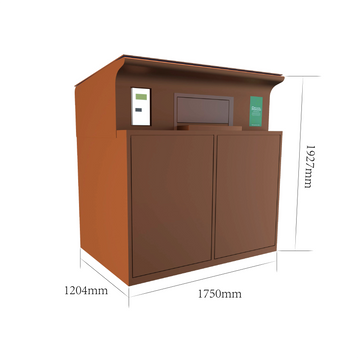
Public waste bins fill up fast in busy areas. How a city deals with that overflow says a lot about how well its waste system actually works. A Solar Bin takes a very different path than a regular bin. It uses sunlight to squash trash down automatically, instead of just relying on frequent pickup trips. Comparing the two side by side shows why solar bins are becoming the smarter pick for busy public spaces.
How Traditional Bins Work
A traditional waste bin is about as simple as it gets. It is just an open container that holds trash until someone comes to empty it. There is no sorting. There is no squashing down. There is no way to know how full it actually is without physically checking. Once it fills up, trash starts piling on top or spilling onto the ground around it.
This simplicity is also its biggest weakness. In busy spots like parks, train stations, or shopping areas, a traditional bin can fill up within hours, way before the next scheduled pickup. Collection crews often end up guessing which bins actually need emptying. They waste time on bins that are barely half full while others overflow completely.
How a Solar Bin Changes Things
A Solar Powered Bin works in a completely different way. A small solar panel on top charges a battery inside all day. This powers a squashing mechanism that presses trash down once the bin gets to a certain fill level. This one feature lets a solar bin hold roughly five times more trash than a regular bin of the same size.
That difference alone changes how often a bin actually needs emptying. Instead of visiting every bin on a fixed schedule no matter what, crews can service solar bins much less often, since each one holds a lot more before filling up completely.
Collection Frequency and Labor Costs
Collection frequency is where the difference really shows up. A traditional bin in a busy spot might need emptying every day. Sometimes more than once a day during busy times. A solar bin handling the same amount of trash can often go four or five times longer between pickups, thanks to its squashing feature.
This directly affects labor and fuel costs. Fewer pickup trips mean less time driving between bins. It means less fuel burned too. It also means fewer staff hours spent on a job that solar squashing mostly handles on its own. For cities and facilities managing lots of bins across a big area, this adds up a lot over a year.
Overflow and Litter Comparison
Overflow is one of the most obvious problems with traditional bins. It also creates a bigger mess beyond just looking bad. Once a bin overflows, people often just leave trash on the ground nearby instead of hunting for another bin. This increases litter across the whole area.
A Solar Compression Garbage Bin mostly avoids this problem by design. Since it holds so much more trash before filling up, overflow becomes far less common. This in turn cuts down the litter that tends to build up around a traditional bin once it simply cannot take anything else.
Weather Resistance and Reliability
Traditional bins handle weather okay, since they are basically just a simple container. But they offer no real advantage when it comes to actual performance in different conditions. A solar bin, on the other hand, is built specifically to work reliably across all seasons. Its panels can charge even during cloudy weather in most climates.
This means a solar bin's main job, squashing trash, keeps working steadily no matter if the day is sunny or cloudy. A traditional bin has no similar advantage here, since it does the exact same simple job no matter the weather outside.
Upfront vs Long Term Costs
Traditional bins cost a lot less upfront. This makes them an easy first choice for anyone watching their budget. But this lower starting cost comes with hidden costs later, more pickup trips, higher fuel and labor bills, and more frequent replacement as basic bins wear out from constant emptying and handling.
Solar bins cost more at first. But they tend to make up for that cost over time through fewer pickups and lower ongoing labor needs. For busy locations especially, the long term savings from fewer collection trips often outweigh the higher starting price within a reasonable amount of time.
Environmental Impact Compared
A traditional bin has no built in environmental benefit beyond just holding trash. A solar bin, on the other hand, runs entirely on renewable solar power. It needs no outside power source to run its squashing mechanism. This makes it a genuinely more sustainable pick for cities and facilities actually trying to lower their environmental impact.
Fewer pickup trips also mean fewer collection trucks on the road. This indirectly cuts down fuel use and emissions tied to waste management work, a benefit traditional bins simply cannot offer given how often they need emptying.
Which Option Fits Your Location
Choosing between the two really depends on how much foot traffic a spot actually gets. A quiet residential street with low waste might not need the higher cost of a solar bin, since a regular bin can handle that smaller amount just fine.
Busy public spaces, like parks, train stations, and shopping areas, tell a very different story though. In these spots, the benefits of a solar bin, less overflow, fewer pickup trips, and lower long term costs, generally make it the smarter choice over a standard traditional bin.
Final Thoughts
Comparing solar bins to traditional waste bins comes down to weighing a higher upfront cost against real long term benefits, less overflow, fewer pickup trips, and genuine environmental gains. For busy public spaces especially, a Solar Powered Bin consistently beats a traditional bin on almost every practical measure. Tom Robots offers a range of solar compacting bins built specifically to handle this kind of high demand public waste management, helping cities and facilities manage trash more efficiently than traditional bins ever could.