
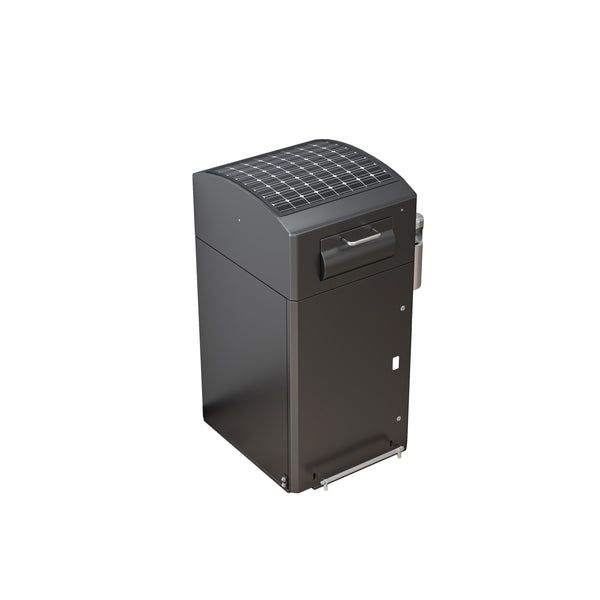
You know what’s strange? We spend so much time talking about smart cities, yet we still rely on bins that behave exactly the same way they did decades ago—fill up, overflow, get emptied, repeat. And in busy places, that simple cycle just doesn’t work anymore.
That’s where Outdoor Waste Compression With Solar quietly changes the game. It doesn’t try to reinvent waste collection completely—it just makes the bin smarter so the whole system stops breaking down every few hours.
It feels like a small upgrade at first glance. But in real-world use, it actually changes how clean a place stays throughout the day.
The real problem with normal outdoor bins
If you’ve ever walked through a crowded park or a weekend market, you’ve probably seen it—bins stuffed to the top, garbage sitting next to them, and people just dropping waste wherever they find space. Not because people don’t care, but because the system is already full.
Traditional bins don’t manage waste. They just hold it. And in high-traffic areas, they reach their limit way too quickly. Once that happens, everything starts slipping—cleanliness, hygiene, even the overall mood of the place.
It’s not a big dramatic failure. It’s a slow daily buildup. And that’s exactly why a different approach started gaining attention.
How solar waste compression actually works
At the heart of it, an Intelligent Solar Trash Compressor is not complicated. It just does one clever thing: it reduces the volume of waste inside the bin so it can hold more without needing immediate emptying. Instead of waiting for a truck to come and clear it, the bin helps itself stay usable for longer.
Here’s how it feels in real life rather than technical terms:
- Sunlight powers the system during the day. Inside the bin, sensors quietly watch how full it is.
- When waste starts reaching the upper limit, the system gently compresses it down, almost like pressing air out of a packed suitcase so you can fit more in.
- And then it just continues working like that throughout the day.
No noise. No interruption. Just space being created again and again.
Why solar power makes it even better
It’s easy to focus on the compression part and forget the solar side, but that’s what makes it practical outdoors. Bins are placed in open areas parks, streets, beaches, where running electrical wiring is either expensive or impossible. Solar power solves that cleanly.
Once installed, the system basically runs on its own energy. It charges during the day and uses that stored power whenever compression is needed. It’s one of those things that quietly makes operations simpler without anyone noticing. And in places where electricity cost or maintenance is a concern, that matters a lot.
Where this system really helps
The interesting part is not the technology—it’s what people experience after it’s installed. In many outdoor locations, waste collection used to feel like a constant emergency. Bins would fill up unpredictably, and cleaning teams would be rushing from one spot to another.
With outdoor waste compression with solar, that pressure drops noticeably.
You start seeing things like:
- Bins staying usable for much longer hours
- Fewer cases of overflow during peak crowd times
- Less mess around waste points
- Cleaner public spaces without extra manpower
It doesn’t eliminate cleaning work—it just makes it less chaotic. And that shift alone is huge.
What changes you actually notice
Not every place needs advanced waste systems. But some locations absolutely do, simply because of how quickly waste builds up.
Think about places like busy metro stations where thousands of people pass through every hour. Or beaches on weekends where trash appears faster than it can be collected. Even tourist spots where footfall is unpredictable throughout the day.
In these environments, an Intelligent Solar Trash Compressor doesn’t just help—it stabilizes the whole cleanup process.
Instead of reacting to overflowing bins, staff can follow a more predictable routine. That alone improves efficiency without adding extra effort.
A simple real-life example
Imagine a popular city park on a Sunday evening. Families are having snacks, kids are running around, food stalls are busy, and waste is being thrown continuously.
In a normal setup, bins would already be overflowing by this time. Someone would eventually come to empty them, but until then, the area slowly gets messy. Now picture the same place with solar compression bins.
Waste goes in, gets compressed, and creates space again. The bin doesn’t look full for a much longer time. Even during peak hours, the surroundings stay under control. Nothing dramatic changes on the surface—but the cleanliness holds steady. That’s the real value.
A Quieter Benefit People often Overlook
There’s another angle that doesn’t get talked about much—efficiency in waste collection routes. When bins don’t fill up as quickly, garbage trucks don’t need to visit the same spots as often. That means fewer trips, less fuel consumption, and better route planning overall.
It may not sound exciting, but in city operations, this reduces a lot of hidden pressure—both in cost and coordination. Even sanitation teams notice it. Instead of rushing constantly, their work becomes more structured.
Things to keep in mind
These smart bins still need proper placement so they get enough sunlight. They also need occasional maintenance, especially for sensors and moving parts. And yes, the initial setup costs more than a regular bin.
But here’s the honest part: most places don’t judge it by installation cost alone. They look at how much cleaner the area stays and how much operational stress reduces over time. And that’s where it usually justifies itself.
Where things are heading in the future
If you zoom out a little, you’ll notice something interesting—waste systems are slowly becoming less manual and more self-managed. We’re moving toward setups where bins don’t just sit there waiting to be emptied. They observe, respond, and optimize space on their own.
In that bigger picture, the Intelligent Solar Trash Compressor feels like an early step rather than the final version. Future systems might track fill levels in real time or even guide collection vehicles dynamically. It’s not science fiction anymore. It’s just gradual improvement.
Conclusion
At the end of the day, most people don’t think about waste systems until something goes wrong. Overflowing bins, bad smells, messy public spaces—that’s when it becomes visible.
But solutions like outdoor waste compression with solar quietly prevent those problems from building up in the first place. They don’t make noise about it. They just keep things under control.
The Intelligent Solar Trash Compressor is one of those simple ideas that makes sense the moment you see it working—less overflow, fewer trips, cleaner surroundings, and less stress on maintenance teams.And when systems like this are supported by innovators like Tom Robots, cities slowly start feeling more organized without anyone really noticing the change happening step by st