
Walk through any busy city park on a Saturday afternoon and you'll spot the same problem within minutes. Bins overflowing onto the path. Litter collected around the base because there was nowhere left to put it. A collection truck that came through two days ago but won't be back until Tuesday. The issue isn't that people litter more than they used to. It's that the infrastructure hasn't kept up with the pace of how people use public spaces. Traditional waste bins were designed for a different era one where foot traffic was predictable, collection schedules were fixed, and overflow was a rare exception. That's no longer the world most cities are managing.
Outdoor Solar Garbage Collector represent the most practical answer that's emerged so far to this very specific and very visible problem. This article breaks down what they actually do, why they work, and why more cities, campuses, and public spaces are moving toward them.
The Core Problem With Traditional Bins
A standard outdoor waste bin has a fixed capacity. When it fills up, it overflows. That overflow happens regardless of whether a collection is scheduled for tomorrow or next week the bin doesn't know and it can't signal anyone. The only way to manage it is through fixed collection routes where trucks drive the same circuit on the same days, emptying bins whether they're full or not.
This creates two problems running simultaneously. Some bins overflow because foot traffic is higher than anticipated. Others get emptied when they're barely a quarter full because they happen to sit on the route. Both outcomes are wasteful one damages the appearance and hygiene of a space, the other wastes fuel, labour, and vehicle hours on unnecessary trips. Neither problem gets solved by simply buying more bins.
What Outdoor Waste Compression With Solar Actually Does
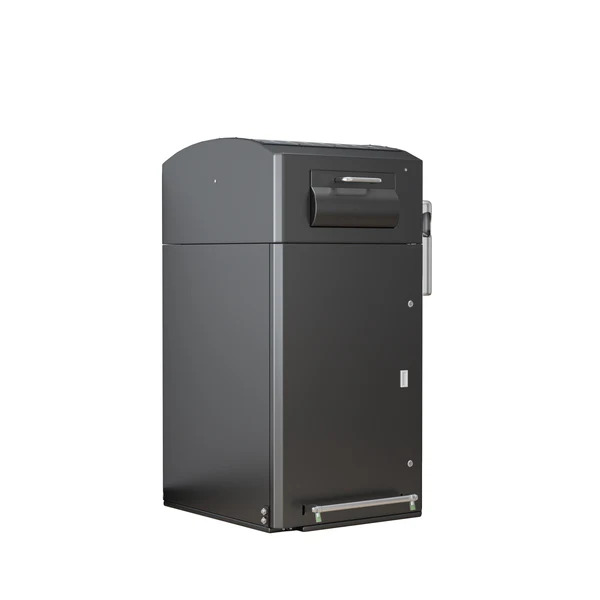
The mechanism behind Outdoor Waste Compression With Solar is straightforward once you understand it. Solar panels mounted on the unit convert sunlight into electricity and store it in an onboard battery. When sensors detect that waste inside has reached a set level, a compaction mechanism activates automatically and that presses the waste down and create room for more. The process repeats each time the bin fills to the threshold, continuing until the unit reaches its actual capacity limit rather than simply, the uncompacted volume.
The result is a bin that holds significantly more waste than its physical size would suggest. Compaction ratios of 5:1 are common, meaning a unit that would otherwise need emptying five times can go through a single collection cycle instead. In high-traffic public environments festivals, transit hubs, shopping precincts, university campuses, coastal promenades this difference is immediately visible. The bin doesn't overflow. The surrounding ground stays clear. The space looks maintained even at peak usage.
The Data Case for Smart Collection
The argument for solar compacting units isn't just operational, it's financial. Collection vehicles are expensive to run. Driver time, fuel, maintenance, and the administrative overhead of managing fixed routes all accumulate into significant recurring costs for municipalities and facility operators. When collection frequency can be reduced because bins hold more and signal when they need attention, those costs drop in direct proportion.
Cities that have moved to solar-powered compacting infrastructure report collection frequency reductions of 70 to 80 percent in some locations. That's not a marginal improvement. It means a bin that previously required daily emptying might need a truck visit once a week. Over a fleet of units across a city, that compounds into substantial savings and a meaningful reduction in vehicle emissions from fewer trucks on the road.
The environmental arithmetic is worth noting separately. Fewer collection trips means less diesel burned and fewer vehicle kilometres logged in dense urban areas. Some operators have reported CO₂ reductions of up to 90 percent from transportation associated with waste collection after transitioning to solar compacting infrastructure. For any city working toward emissions targets, that figure matters.
Why Parks, Campuses and Public Spaces Are Early Adopters
The locations where Outdoor Solar Garbage Collector have gained the fastest adoption share a common characteristic: waste generation is uneven and hard to predict. A park might be quiet on a weekday morning and completely overwhelmed by Saturday afternoon. A university campus generates intense waste during term time and almost none in the summer. A beach destination sees usage spikes tied to weather rather than calendar.
Fixed collection schedules perform poorly in all of these contexts. A route designed for average conditions will always underserve the peaks and overshoot the quiet periods. A solar compacting unit with fill-level monitoring changes this entirely. The unit communicates its status in real time, and collection only happens when it's actually needed. The route becomes responsive rather than routine.
There's also a practical durability point. Units designed for outdoor use in public spaces need to handle weather, vandalism attempts and constant usage, without requiring frequent maintenance or replacement. Well-built compacting units use steel-reinforced housings, weather-sealed electronics, and solar panels rated for outdoor exposure. The construction isn't incidental it's part of what makes the technology viable in the environments where it's most needed.
The Bigger Picture
The shift toward smarter waste infrastructure isn't happening because cities have become more environmentally conscious overnight. It's happening because the data is clear: reactive, schedule-based collection is expensive and ineffective, and the gap between what traditional bins can handle and what modern public spaces demand keeps widening.
Tom Robots manufactures solar powered compacting bins in 150L, 240L, and 1100L capacities built for parks, campuses, and high-traffic public areas that need reliable, low-maintenance waste management at scale. Explore the full range here.